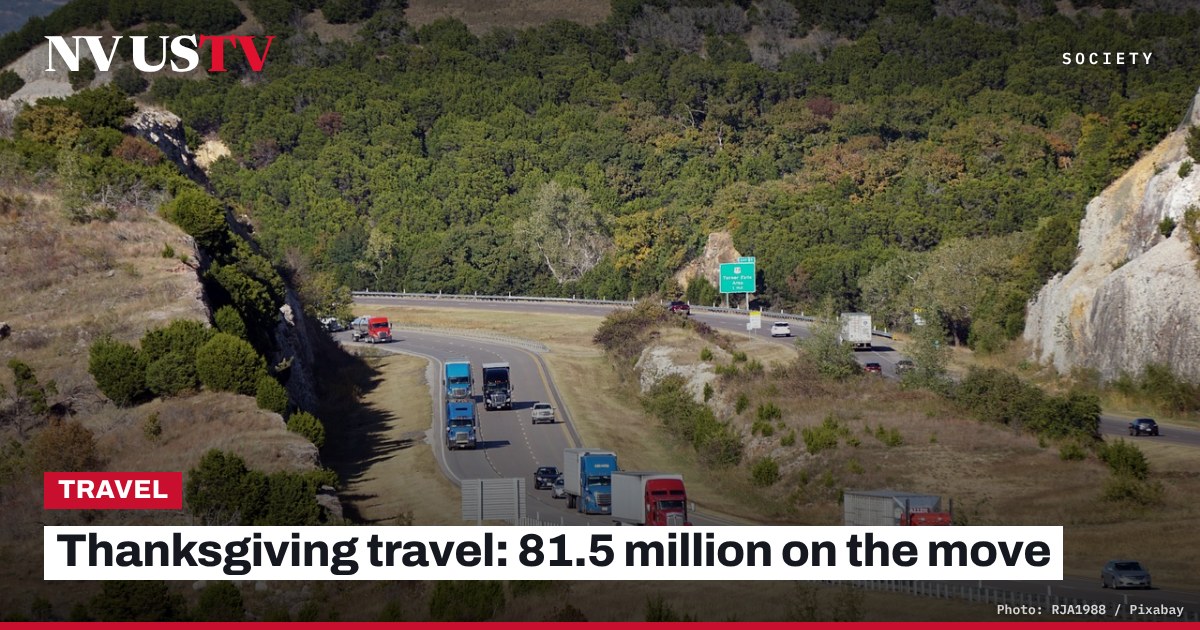
The Thanksgiving getaway is underway. AAA projects that 81.5 million people will travel at least 50 miles from home between Tuesday, Nov. 24, and Monday, Nov. 30 — roughly one in four Americans.
That is still one of the busiest holiday periods on record, but it is a slight step back. Last year, 81.6 million people traveled over the same holiday, according to AAA’s revised figures. The 0.1% dip, about 121,000 fewer travelers, ends a three-year run of record Thanksgiving travel that began in 2023.
Fewer drivers, as gas prices climb
The car remains by far the favorite way to get to the turkey: nearly 90% of holiday travelers will drive. AAA expects 72.9 million people on the roads, down from 73.1 million last year.
AAA attributes the 200,000-driver drop in part to gas prices. The national average set new monthly records in August, September and October, and November could follow. For context, the highest Thanksgiving pump price on AAA’s books was $3.58 a gallon, in 2022.
Pricier flights, slightly fewer flyers
About 5.96 million Americans are expected to fly domestically, a 0.2% decrease from 2025. Air travelers make up a little more than 7% of the total.
Tickets cost more this year. Based on its booking data, AAA says the average domestic round-trip fare is around $800, up 17% from last year.
Buses, trains and cruises gain ground
One category is growing: 2.6 million people are expected to travel by bus, train or cruise ship, up 4.1% from last year.
When to drive — and when to avoid it
Transportation analytics firm INRIX expects the heaviest traffic on the Tuesday and Wednesday before Thanksgiving, and on the Sunday and Monday after. The worst congestion typically builds in the afternoon and early evening, local time:
- Tuesday, Nov. 24: worst 2–8 p.m.; best before 1 p.m.
- Wednesday, Nov. 25: worst noon–7 p.m.; best before noon
- Thursday, Nov. 26 (Thanksgiving): minimal traffic expected
- Friday, Nov. 27: worst 1–7 p.m.; best before noon
- Saturday, Nov. 28: worst noon–9 p.m.; best before 11 a.m.
- Sunday, Nov. 29: worst noon–8 p.m.; best before 11 a.m.
- Monday, Nov. 30: worst 2–7 p.m.; best before 1 p.m.
The bottom line: leaving early in the morning is the simplest way to avoid the worst of the jams.
Why it matters
The forecast suggests travel demand has leveled off after the post-pandemic rebound rather than collapsed. AAA’s projection measures trips of 50 miles or more and is not directly comparable with TSA’s airport screening counts, which track a different metric.